-
Buyer Protection
Free Online Doctor Information.
No Contracts. Pay monthly.
Treatments


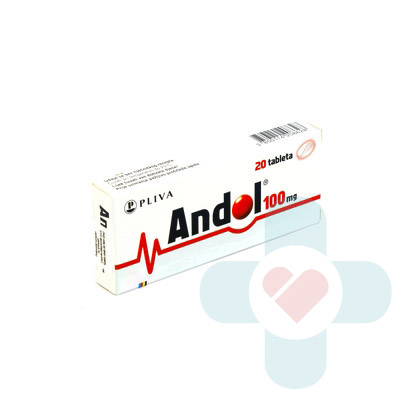
ANDOL 100
acetylsalicylic acid (B01AC06)
Also known as: Aspirin
This medicine contains the active ingredient acetylsalicylic acid which, in lower doses, belongs to a group of medicines known as antithrombotics that prevent the accumulation and adhesion of platelets and thereby prevent formation of blood clots. Platelets are blood cells that cause blood clotting, and participate in the creation of a blood clot (thrombosis). If a blood clot develops in an artery, it prevents blood flow and oxygen supply. If this occurs in the heart it may lead to heart attack or angina pectoris (chest pain), and if it occurs in the brain, to a brain stroke. This medicine is prescribed for the prevention of heart attack and stroke, unstable angina and short-term disturbances of cerebral circulation. It is also used to prevent blood clots after certain operations on the heart, for the prevention of thromboembolism after surgery on a blood vessel or other surgical intervention (eg. Carotid endarterectomy); to reduce the risk of first myocardial infarction in people with risk factors for developing heart disease and blood vessel diseases ( people with diabetes, hypertension (high blood pressure), obesity, smoking habit, age); for the prophylaxis of deep vein thrombosis and pulmonary embolism after a long period of immobilization. [...]
Patient information leaflet
Product information
This medicine contains the active ingredient acetylsalicylic acid which, in lower doses, belongs to a group of medicines known as antithrombotics that prevent the accumulation and adhesion of platelets and thereby prevent formation of blood clots. Platelets are blood cells that cause blood clotting, and participate in the creation of a blood clot (thrombosis). If a blood clot develops in an artery, it prevents blood flow and oxygen supply. If this occurs in the heart it may lead to heart attack or angina pectoris (chest pain), and if it occurs in the brain, to a brain stroke. This medicine is prescribed for the prevention of heart attack and stroke, unstable angina and short-term disturbances of cerebral circulation. It is also used to prevent blood clots after certain operations on the heart, for the prevention of thromboembolism after surgery on a blood vessel or other surgical intervention (eg. Carotid endarterectomy); to reduce the risk of first myocardial infarction in people with risk factors for developing heart disease and blood vessel diseases ( people with diabetes, hypertension (high blood pressure), obesity, smoking habit, age); for the prophylaxis of deep vein thrombosis and pulmonary embolism after a long period of immobilization.
Is Acetylsalicylic acid suitable for me?
Acetylsalicylic acid is not suitable for everyone. Do not use it
- if you are allergic (hypersensitive) to acetylsalicylic acid or to any of the other ingredients in this medicine
- if you have a serious kidney or liver disease
- if you are in the last trimester of pregnancy
- if you are receiving methotrexate at a dose of 15 mg / week or more
In particular, you must tell the doctor if you:
- are pregnant, trying to get pregnant or breast-feeding
- had an allergic reaction to other nonsteroidal anti-inflammatory drug
- are taking other anticoagulant drugs
- have heart, liver or kidney problems
- have ever had problems with your stomach or small intestine
- have high blood pressure
- have asthma, hay fever, nasal polyps or other chronic diseases of the respiratory system
- have ever had a gout attack
- have heavy menstrual bleeding
Acetylsalicylic acid interacts with other medicines. It is most important that you tell the doctor all the medications and herbal supplements that you are currently taking.
See the package leaflet for a complete list of possible contraindications and warnings.
How should I take Acetylsalicylic acid?
This medicine is available in form of a tablet.
You should take Acetylsalicylic acid exactly as instructed by your doctor or pharmacist. You will be prescribed your dose according to your needs.
- The usual dose is 100 to 300 mg per day.
Do not use more of it, do not use it more often, or do not use it for a longer time than your doctor instructed. Also, this medicine works best if there is a constant amount in the blood. To help keep this amount constant, do not miss any doses and take the medicine at the same time each day. Do not take two doses together if you miss a dose.
Read the information leaflet provided with your medication for additional information. Talk to your doctor if you have any additional questions.
What are Acetylsalicylic acid side effects?
Like all medicines acetylsalicylic acid can cause side effects, including:
Common:
- indigestion
- increased bleeding tendency
Uncommon:
- rash
- runny nose
- difficulty breathing
Rare:
- bleeding in the stomach or intestines, bleeding in the brain, altered blood counts
- nausea and vomiting
- asthma
- inflammation of blood vessels
- bruising or purple stain (skin bleeding)
- erythema polymorphic
- Stevens-Johnson syndrome and Lyell's syndrome
- hypersensitivity reactions
- unusually abundant or prolonged menstrual bleeding
Consult a doctor if the side effects are severe. See the package leaflet for a complete list of side effects.